




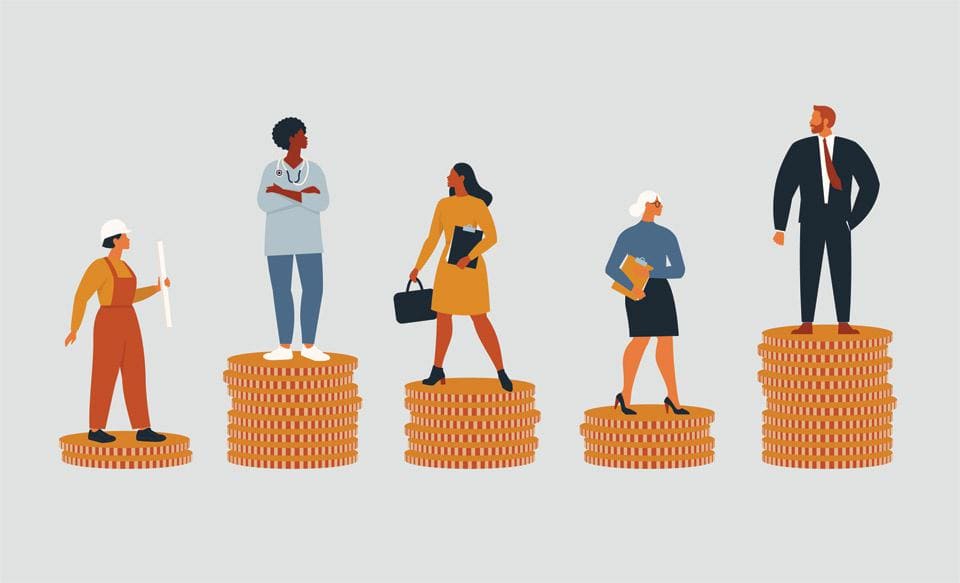
India loves to present itself as a rising global powerhouse, but the World Inequality Report 2026 forces us to look at the truth beneath the headlines. The country is growing, but that growth is not reaching most Indians. The report clearly shows that India is one of the most unequal countries in the world, and this inequality is not shrinking, it is staying exactly where it has been for years.
The Rich Take Most of the Income, the Poor Share the Rest
The report highlights that:
-
The top 10 percent earn 58 percent of India’s total income
-
The bottom 50 percent earn only 15 percent of national income
-
The top 1 percent own around 40 percent of India’s wealth
-
The top 10 percent own 65 percent of India’s wealth
These numbers show a nation where a small elite controls almost everything, while half the country has only a tiny share of income and wealth.
India’s Inequality Has Not Improved in a Decade
This is one of the strongest messages of the report. Despite years of economic reform and rapid GDP growth, the gap between the rich and the rest of the population has barely changed.
-
Income distribution of the top 10 percent and bottom 50 percent has remained almost unchanged since 2014
This means that economic growth has benefited only a narrow section of society.
India’s Average Income Remains Very Low
Another major insight from the report is that:
-
India’s average per capita income is just 6,224 euros in purchasing power terms
For a country claiming global economic leadership, this level of average income shows a serious disconnect between growth projections and real individual prosperity.
The Silent Crisis, Women Missing from the Workforce
One of the most troubling findings is about women:
-
Female labor force participation is only 15.7 percent and has not improved in ten years
This means that half of India’s population is almost absent from formal economic activity. This is not just a social problem, it is a major economic loss.
What This Means for India’s Future
The consequences of this level of inequality are serious.
-
When the top 1 percent holds 40 percent of the wealth, economic power becomes concentrated
-
The middle class becomes financially vulnerable
-
The bottom 50 percent struggle to access basic opportunities like education, healthcare, and home ownership
Such extreme inequality also weakens economic demand. If only a small group has spending power, long term growth becomes unstable and dependent on luxury consumption rather than broad based economic activity.
India’s Position Compared to the World
According to the report’s global comparison charts:
-
India sits among the most unequal countries worldwide
-
Wealth concentration in the top 1 percent is significantly higher than in many developing economies
This shows that inequality in India is not a minor issue, it is a defining national challenge.
What India Must Do Now
The report makes one thing clear. Inequality in India is not accidental. It is the result of how policies, economic structures, and opportunities have been shaped over years. If India does not course correct now, the divide will grow wider.
India must:
-
Strengthen social welfare and safety nets
-
Increase female workforce participation through real, actionable policy
-
Improve tax progressivity to ensure fair contribution from the wealthy
-
Boost income opportunities for the bottom 50 percent
-
Ensure transparency in wealth reporting and asset distribution
Growth must lift the many, not only the few.
Post a comment
Broken Research System in India !!!
India wants to be a global innovation leader, but a recent NITI Aayog report exposes...
A Major Boost for Workplace Safety, New POSH Guidelines
The Supreme Court of India has expanded the reach of the sexual harassment law at...
Indian Navy Day 2025: Honouring Valor, Power and India’s Maritime...
Indian Navy Day 2025, observed on December 4, commemorates the Navy’s courage, discipline and strategic...
How Stricter CAFE Norms Could Hurt Common Indians!!!
The new Corporate Average Fuel-Efficiency norms (CAFE) rules aim to clean up India’s roads and...