




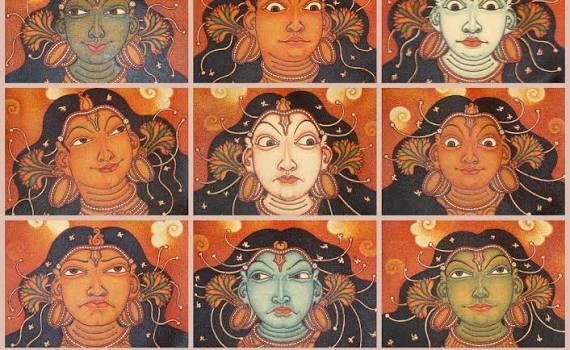
India’s classical aesthetic theory of rasa — literally the juice or flavour of emotion — shows how art evokes universal moods in audiences rather than just telling a story. According to mythologist Devdutt Pattanaik, the rasa tradition begins with Bharata’s Natya Shastra: theatre, music and dance generate distilled emotional essences that transcend personal feelings and draw the spectator into a shared emotional experience. Eight core rasas — love, humour, sorrow, courage, rage, fear, disgust and wonder — form the foundational palette of feelings that art can evoke. Later thinkers added a ninth, shanta (peace or bliss), tying aesthetic experience to a momentary dissolution of self.
This Indian framework differs sharply from the Aristotelian idea of catharsis, where emotional impact comes from plot resolution and moral consequence. Instead, rasa treats art as a psychological journey where the audience forgets the self and enters a shared emotional space shaped by gesture, rhythm and suggestion. The theory evolved over centuries through regional poetry, philosophical commentaries and performing arts, embedding itself deeply in Indian cultural expression. Rasa remains central to classical dance, music and modern film studies, offering a uniquely Indian lens on how art connects feeling with aesthetic appreciation.

Post a comment


Chtrbox Goes Global, Picks Dubai as First Hub!
India’s publicly listed creator-economy firm Chtrbox launches its first international market in Dubai, aiming to...
Threads Overtakes X in Daily Mobile User Rankings!
New data shows Meta’s Threads now surpasses Elon Musk’s X in daily mobile active users,...
Budget Day Stocks in Focus: BEL, ITC, Hero MotoCorp!
Markets dipped on higher STT, yet key names like BEL, HAL, ITC, Hero MotoCorp and...
Zodiac Guidance: Daily Horoscope for December 25, 2025!
Astrological predictions for all 12 zodiac signs today, highlighting shifts in mood, career, relationships and...