




When we think about Indian startups, food delivery apps and quick-commerce platforms usually come to mind. But away from the spotlight, a very different kind of innovation is taking shape, one that doesn't deliver meals, but protects India's future.
Quietly, India is building satellites.
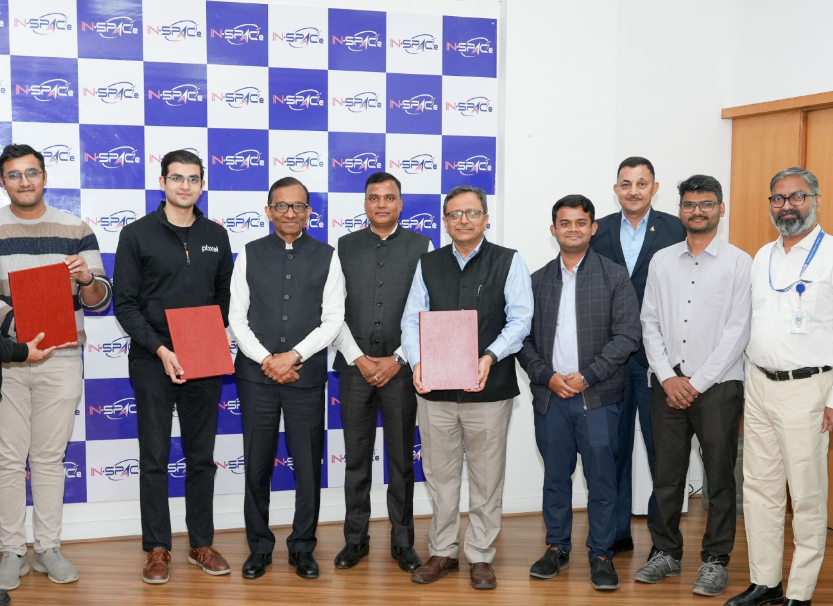
One such story comes from Pixxel, a space technology startup founded by two BITS Pilani students, Awais Ahmed and Kshitij Khandelwal. What began as a college idea has now turned into satellites orbiting Earth, built with Indian engineering and global ambition.
Seeing What the Human Eye Cannot
Most satellites capture images the way cameras do by recording only what's visible. Pixxel's satellites go several steps further, using hyperspectral imaging technology that detects subtle changes in land, water, and air long before problems become visible on the ground.
Think of it as giving Earth a detailed health checkup from space. While conventional satellites might see a green field, Pixxel's technology can identify which crops are under stress, which areas face nutrient deficiency, and where disease might strike next even sometimes weeks in advance.
Early signs of crop stress can be identified before farmers face devastating losses. Illegal mining or deforestation becomes visible even under dense canopy cover. Pollution in water bodies can be detected before it spreads further. Oil spills, methane leaks, and environmental changes can be tracked before they turn into irreversible damage.
In simple terms, these satellites help spot problems early, when they are still fixable.
Why This Matters to Everyday Indians
This isn't just space science for scientists.
For Indian farmers, it means healthier crops, water conservation insights, and data-driven decision-making that can protect livelihoods. For governments, it means stronger environmental monitoring, urban planning, and disaster preparedness. For citizens, it means a cleaner environment, better resource management, early warning systems for natural disasters, and a more secure future.
And most importantly, this technology is being built by Indian minds, with India's challenges in focus from monitoring the Ganges to tracking Himalayan glaciers.
From Classrooms to Orbit
Pixxel's journey reflects how far Indian entrepreneurship has evolved. Two students, starting from classrooms, are now contributing to how the planet is monitored from space. Their satellites have already launched aboard SpaceX missions, and they're building a constellation designed to image the entire planet daily.
This isn't just innovation but it represents a shift. India is no longer just a user of advanced technology. It is becoming a builder, a creator, and a global contributor in space technology.
A Quiet Revolution in the Sky
There are no flashy billboards for satellites. No instant gratification like app downloads. But the impact is far deeper and far more lasting.
Stories like Pixxel's show that while some startups focus on convenience, others are working on resilience by protecting food systems, natural resources, and the environment for generations to come.
India's space future is not being written by government agencies alone. It is being shaped by young founders, bold ideas, and technology built at home.
And that is something every Indian can be proud of.


Post a comment

Threads Overtakes X in Daily Mobile User Rankings!
New data shows Meta’s Threads now surpasses Elon Musk’s X in daily mobile active users,...
Chtrbox Goes Global, Picks Dubai as First Hub!
India’s publicly listed creator-economy firm Chtrbox launches its first international market in Dubai, aiming to...
Kanwal Rekhi Says Profitability Shows Startup Efficiency!
Veteran investor Kanwal Rekhi argues startups must focus on profitability as a true measure of...
IITian Faced 17 Failures, Built ₹40,000 Crore ShareChat!
Ankush Sachdeva turned 17 startup failures into lessons and co-founded ShareChat — a regional social...
Unearthing the ‘Kohinoors’ of Indian Entrepreneurship!
A new wave of entrepreneurs is transforming rural and semi-urban India into a global economic...