





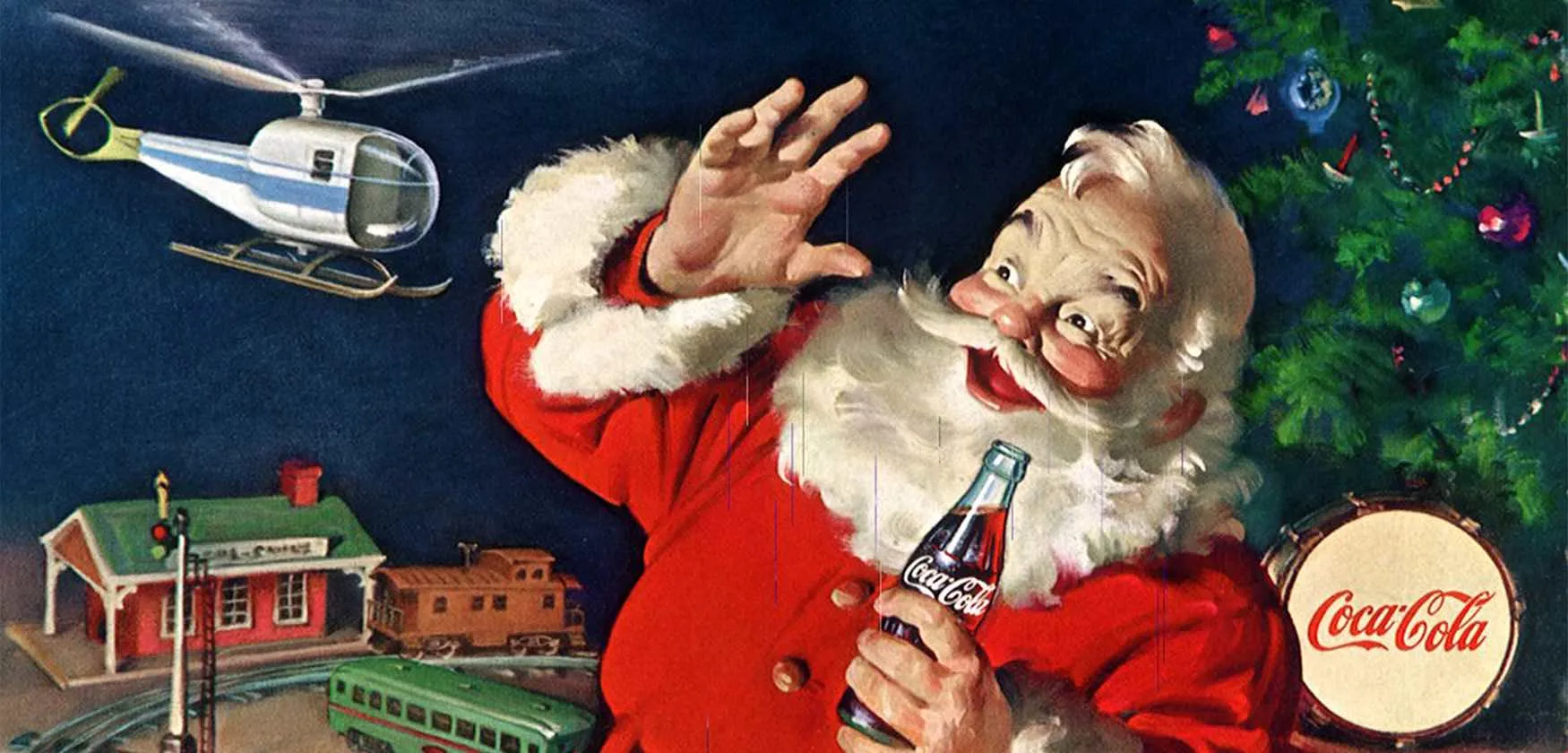
Every December, the same Santa appears everywhere. Red suit. White beard. Warm smile. Laughing eyes. Holding gifts, joy, and somehow a Coca-Cola.
Many people believe Coca-Cola created Santa Claus. That sounds dramatic, but it is not true. Santa existed for centuries before Coca-Cola entered the picture. What the brand did was something far more interesting.
Before the 1930s, Santa had no fixed look. Some artists showed him thin. Some made him scary. Some dressed him in green, brown, or even star-spangled outfits. He was familiar, but visually confused.
Then came Coca-Cola’s problem. Winter sales were weak. People did not think of soft drinks as a cold-season habit. The brand needed a cultural bridge. Something emotional, familiar, and seasonal.
In 1931, Coca-Cola hired illustrator Haddon Sundblom. Instead of inventing a new Santa, Sundblom refined what already existed. Inspired by the famous poem ’Twas the Night Before Christmas, he painted Santa as warm, human, and deeply lovable.
This Santa was not just posing. He read children’s letters. Played with toys. Sneaked into kitchens. Shared quiet moments of joy. He felt real, like someone you trusted.
Coca-Cola stayed disciplined. For over 30 years, the company used the same Santa, painted in the same style, across magazines, billboards, stores, calendars, and later television. Year after year. No confusion. No reinvention.
That consistency changed everything.
Other brands had used Santa before. Some even showed him in a red suit earlier than Coca-Cola. But they treated Santa as a seasonal decoration. Coca-Cola treated him as a long-term cultural character.
Slowly, Sundblom’s Santa stopped being Coca-Cola’s Santa. He became Santa. Any other version started to look wrong.
This is where branding becomes powerful. Coca-Cola did not sell soda. It sold emotion. Family warmth. Childhood wonder. The feeling of Christmas itself. Buying Coke became part of participating in the season.
As the brand expanded globally, this Santa traveled with it. Local traditions faded. One image took over. Not by force, but by repetition, quality, and emotional connection.
So no, Coca-Cola did not invent Santa Claus.
But it standardized him. Humanized him. Repeated him.
Until the world forgot there was ever another version.
That is the real lesson.
Cultural dominance is not built by creating something new.
It is built by perfecting something familiar and committing to it longer than anyone else.


Post a comment


Chtrbox Goes Global, Picks Dubai as First Hub!
India’s publicly listed creator-economy firm Chtrbox launches its first international market in Dubai, aiming to...
Zodiac Guidance: Daily Horoscope for December 25, 2025!
Astrological predictions for all 12 zodiac signs today, highlighting shifts in mood, career, relationships and...
Desert to Drinking Water: How UAE Keeps Millions Hydrated!
Despite having no rivers or lakes, the United Arab Emirates meets water needs through large-scale...
Threads Overtakes X in Daily Mobile User Rankings!
New data shows Meta’s Threads now surpasses Elon Musk’s X in daily mobile active users,...